
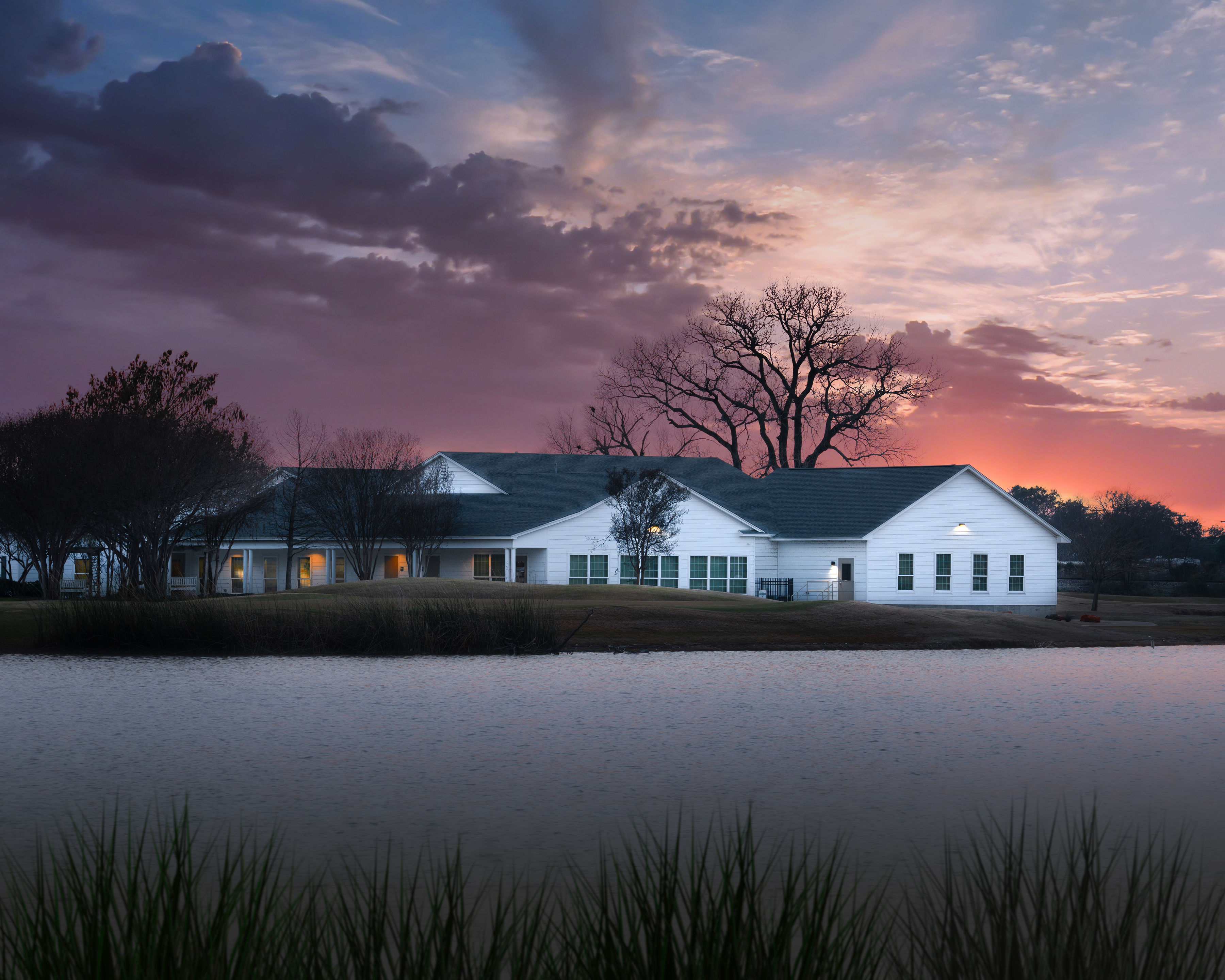
Temple Voters Will Decide a $15 Million Sammons Community Center Bond. Here’s What Proposition A Does
The measure would authorize Temple to borrow up to $15 million to replace the century-old Sammons Community Center. The proposed bond would be repaid through property taxes, with the city estimating an annual impact of about $30 on a $300,000 homestead.
Temple voters will decide next month whether to authorize up to $15 million in new debt to replace the Sammons Community Center, a city facility dating back to 1921 that has remained closed after structural problems were uncovered following the May 2024 tornado.
Proposition A will appear on the Nov. 3 ballot. If approved, the City of Temple could issue up to $15 million in general obligation bonds for demolition, design, construction, equipment and related work on a replacement community center. The Temple City Council voted in August to send the question to voters.
The decision is ultimately fairly simple.
A vote for Proposition A authorizes the city to borrow the money and levy the property taxes necessary to repay it. A vote against prevents the city from issuing the proposed bonds; any future plan for Sammons would have to return to the City Council separately.
The details behind that choice are more complicated.
Why is Sammons being replaced?
The May 2024 tornado did not create all of Sammons’ problems.
According to the city, storm damage led to what officials initially expected would be roof repairs. Instead, engineers discovered broader deficiencies in the building’s roof framing and structural system. Two engineering firms later identified problems including weak roof connections, inadequate bracing, added weight from decades of modifications and deficiencies in portions of the original brick structure.
The facility ultimately closed in March 2025. After considering repair and partial reconstruction, the city concluded that replacement made more sense than continuing to invest in the existing structure.
The proposal now before voters is for a roughly 20,000-square-foot replacement designed for more than the senior programming historically associated with Sammons. Current concepts include flexible program and event rooms, fitness and recreation areas, gathering spaces and improved accessibility and parking.
Those drawings are not final plans.
The city has emphasized that the renderings released before the election are conceptual. Final design and bidding would occur after voters approve the bond.
Where would the $15 million go?
The city’s current estimate breaks the project into approximately $12.25 million for building and site construction, $1 million for furniture and equipment, $1.05 million for design and bidding, $550,000 for construction-related services and materials testing, and $150,000 for demolition.
The $15 million is an authorization ceiling — not a requirement that every dollar be borrowed or spent.
But because the debt would be backed by the city’s property-tax revenue, state law requires the ballot to include language that voters will see in capital letters:
“THIS IS A TAX INCREASE.”
The city estimates the bond would add $0.0125 per $100 of taxable value beginning in fiscal year 2028, corresponding to tax year 2027.
Using Temple’s 20-percent homestead exemption, the city estimates the maximum annual impact at approximately $10 on a $100,000 home, $20 on a $200,000 home, $30 on a $300,000 home and $40 on a $400,000 home.
Temple also has a property-tax ceiling for qualifying homeowners who are 65 or older or disabled. Those homeowners generally would not see their city tax bill rise because of the bond beyond their established ceiling, except where allowed by law for certain property improvements.
Rowan has pledged $3 million if the bond passes
Rowan Digital Infrastructure has committed $3 million toward the Sammons Community Center rebuild, contingent on voters approving the November bond proposition. The company describes the contribution as part of its broader community investment in Temple.
The pledge does not change the question on the ballot: voters are being asked to authorize up to $15 million in bonds. What remains to be clarified is how the city would apply Rowan’s contribution—whether it would reduce the amount borrowed, provide additional project funding, or otherwise offset costs.
The question for voters
The debate is therefore not simply whether Temple should have a community center.
Voters are being asked whether replacing Sammons is worth taking on as much as $15 million in long-term municipal debt and the accompanying property-tax increase.
Some residents attending the city’s public meetings have questioned whether Temple could use another existing facility or pursue a less expensive alternative. Others have pointed to the loss of a dedicated gathering place and programming for residents who previously relied on Sammons.
Temple will hold two more public open houses before the election: Oct. 19 at 6 p.m. at Gober Party House and Oct. 20 at 10 a.m. at Wilson Recreation Center. City staff will be available to discuss the proposed project, tax impact and conceptual plans.
Early voting begins Oct. 19.
On Nov. 3, Temple voters will make the final decision: authorize the bonds and move the replacement project forward, or send the city back to the drawing board.