
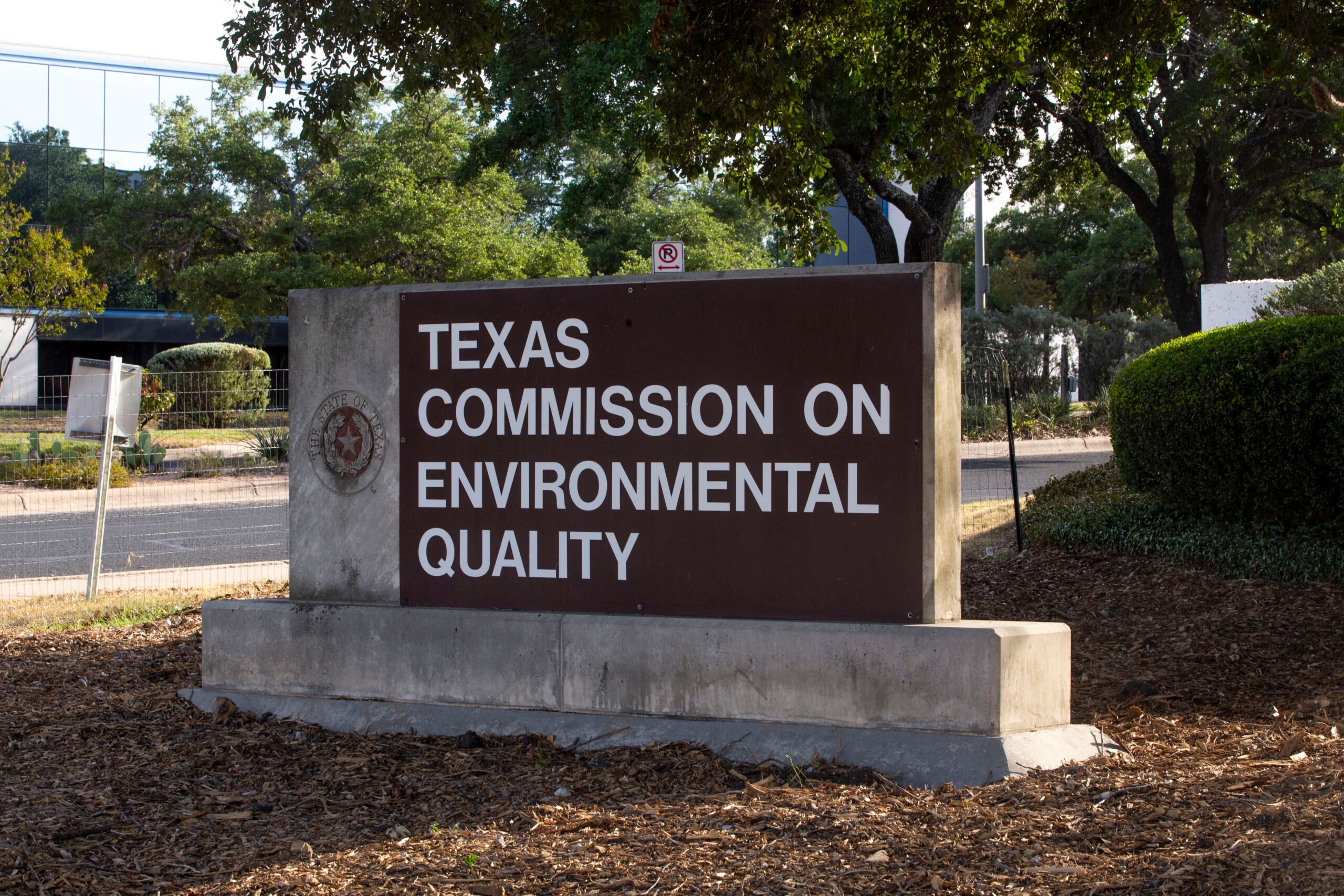
Gov. Greg Abbott's office ended a two-month environmental permitting pause at the Texas Commission on Environmental Quality nearly four weeks before ERCOT's grid and community-impact report is due, leaving open how much that review will govern projects in Bell County and across the state.
On Sept. 21, Gov. Greg Abbott gave Texas's environmental regulator an explicit stopping point.
"I direct the TCEQ to pause the issuance of all permits related to data center projects until ERCOT completes its review," Abbott wrote in a two-page letter to then-Executive Director Kelly Keel.
On Nov. 13, Abbott's office told the Texas Commission on Environmental Quality that the Electric Reliability Council of Texas had finished gathering community-impact information, according to The Texas Tribune. TCEQ spokesperson Laura Lopez told the Tribune and Data Center Dynamics that the agency had "resumed its normal permit review process."
Three days later, on Nov. 16, TCEQ issued an air-quality standard permit to Space Exploration Technologies Corp. for three 10.38-megawatt natural-gas turbines at its Starbase Production Site in Brownsville—an application filed Sept. 17, before the pause began.
That sequence looks tidy on a calendar. The public filings are less settled.
What ERCOT Finished, and What Remains Open
Abbott's Sept. 21 directive followed an Aug. 3 order halting data-center grid interconnections pending an ERCOT audit, and a Sept. 14 order directing the Texas Water Development Board to enforce water-use reporting and partner with ERCOT. In an Oct. 19 reply, TCEQ Interim Executive Director Steven Schar wrote that the agency had paused permits for infrastructure directly supporting data centers and was suspending claimed authorizations where possible.
Neither Abbott's office nor TCEQ has released the Nov. 13 notice lifting the pause. What ERCOT has placed on the public record is its Nov. 4 letter and Nov. 5 presentation to the Public Utility Commission in Project No. 59142.
Those slides show 433 of 465 loads—93 percent of projects, representing roughly 177.4 gigawatts—answered ERCOT's community-impact request, including all 245 large loads of 75 megawatts or more. Respondents answered 83 percent of nearly 67,000 questions, which ERCOT called sufficient for a "statistically meaningful analysis."
Every page of that deck is stamped "PRELIMINARY AS OF 11/5." The same presentation states that "detailed data analysis is currently underway, and ERCOT is targeting a published final report on December 10, 2026." ERCOT told ABC13 on Nov. 20 that full findings will not be complete until Dec. 10.
The distinction matters. Collecting survey responses is not the same thing as finishing an audit.
Competing Readings of the Restart
Watchdog groups say regulators moved the finish line after the Nov. 3 election. Public Citizen and FracTracker Alliance told the Tribune and ABC13 that TCEQ resumed issuing permits—pointing to the Nov. 16 Starbase approval, which Politico and Data Center Dynamics tied to SpaceX's planned Starbase data center—without releasing ERCOT's findings or explaining how TCEQ will use community-impact data. TCEQ's technical review for Registration No. 185386 authorizes 31.14 megawatts of onsite turbine generation rather than an entire data-center campus, and neither TCEQ nor Abbott's office answered ABC13's questions on whether new approvals satisfy Abbott's September grid and water conditions.
There is also a narrower regulatory case for lifting the freeze. ERCOT already holds responses covering about 97 percent of requested interconnection capacity, and Senate Bill 6, enacted in 2025, already directs the PUC to enforce interconnection, curtailment, and cost-allocation rules for loads of 75 megawatts or more. TCEQ reviews air and stormwater applications under environmental statutes rather than grid-reliability law, leaving an open-ended administrative freeze exposed to legal challenge.
What Public Records Show in Temple
In Bell County, the state debate intersects with two major Temple campuses: Meta's and Rowan Digital Infrastructure's.
Public records reviewed by The Directory News establish only limited state air filings in Temple, and no pending permits. A Dec. 13, 2024 TCEQ letter acknowledges an annual operational-status notice under Texas Water Code § 5.587 from Meta affiliate Polmer LLC for Registration No. 168139. A June 15, 2026 letter acknowledges an APD-CERT emissions self-certification (Registration No. 184409) from Rowan Stampede LLC for its Stampede Data Center; TCEQ explicitly notes it performed no technical review of those rates, and the filing predates Abbott's pause.
Rowan Stampede is also fighting ERCOT at the PUC in Docket No. 60396, challenging ERCOT's reclassification of its Moriah 2 project from "Base Load" to "Studied Load." That grid dispute is abated through Nov. 30 under Order No. 4.
Locally, Temple adopted its own guardrails on Sept. 17. According to the city's council recap, Temple required closed-loop cooling, capped daily operational water use across Rowan's three phases at 13,800, 8,200, and 10,100 gallons, approved a $38.55 million infrastructure agreement, and amended Rowan's tax abatement so temporary onsite generation cannot satisfy investment commitments.
What TCEQ's internal queue holds for Temple remains unverified. Title V notice lists and November commission agendas showed no Temple data-center items, but TCEQ's Central Registry returned a server error and its interactive pending-application tools could not be queried. An empty search does not prove no Bell County permit is pending or newly cleared.
What Comes Next
Lifting the freeze on Nov. 13 opened a two-month window before Texas's leadership changes. Gov.-elect Gina Hinojosa, who campaigned on a moratorium on state data-center approvals, takes office Jan. 19, 2027, one week after the 90th Legislature convenes Jan. 12. On Nov. 20, Rep.-elect Castellano filed House Bill 1273, proposing a two-year moratorium on projects of at least 20 megawatts or 50,000 square feet, local-option voter approval, a new TCEQ impact permit, and repeal of state sales-tax exemptions.
None of those proposals is law. Until Jan. 19, TCEQ is reviewing applications under existing statutes, while ERCOT's audit findings remain unpublished.
The first real test of what Texas actually learned arrives Dec. 10.