
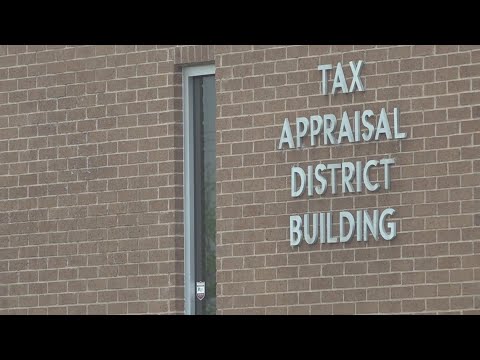
Bell County voters will return to the polls December 12 to decide a single seat on the Bell County Appraisal District's board of directors. The election could cost taxpayers approximately $210,000.
Bell County Tax Assessor-Collector Shay Luedeke, who also serves on the appraisal district board, raised concerns about the expense in a public statement following last week's general election. The Killeen Daily Herald subsequently reported a more precise estimated cost of $210,696. Unlike November's general election, which included dozens of federal, state and local contests, the December runoff will determine just one position on the appraisal district board. The position itself is unpaid.
Information relayed to The Directory News from a Bell County Republican Party County Executive Committee meeting indicates that the current plan is to operate all 42 Election Day polling locations used during the general election. That plan has not yet been independently confirmed through an official election notice or contract.
The reported expense raises questions about the cost of conducting a standalone countywide election, the financial responsibilities of the appraisal district and the requirements established by state law.
Why Another Election Is Required
Three candidates competed for Place 2 on the Tax Appraisal District of Bell County's board of directors in the November 3 general election. James Butts received 30,788 votes, or approximately 41.8%. Gwendolyn Everett received 26,839 votes, or 36.4%, while Paul Strang finished third with 16,020 votes, or 21.8%. Because no candidate received more than half the votes, Butts and Everett will face one another in a runoff.
Texas law requires elected appraisal district directors to win a majority, rather than simply receiving more votes than their opponents. The Texas Secretary of State has designated December 12 for runoff elections resulting from the November 3 local elections. The requirement is part of the state's relatively new system for publicly electing appraisal district directors.
Under legislation enacted in 2023, appraisal districts in counties with populations of at least 75,000 are governed by nine-member boards. Five directors are appointed by participating taxing entities, three are elected by county voters, and the county tax assessor-collector serves as an ex officio member.
The November 2026 election marked the transition to regularly scheduled November elections for these positions, following their initial election in May 2024.
The runoff is therefore not a discretionary decision by BellCAD or the county elections administrator. State law requires a runoff when no candidate receives a majority, but also permits its cancellation if a candidate withdraws before the statutory deadline.
Could the Runoff Be Canceled?
Texas law provides a way for the December 12 runoff to be avoided.
Under Election Code Section 145.095, if either James Butts or Gwendolyn Everett formally withdraws before the applicable deadline, the remaining candidate is considered elected and the runoff for that office is not held.
The deadline is 5 p.m. on the third day after the final canvass of the November 3 election. The Texas Secretary of State requires local political subdivisions to complete their canvass no later than November 17, meaning the latest possible withdrawal deadline would be November 20.
A timely withdrawal could eliminate much of the expense associated with operating a separate election, although costs already incurred for planning, equipment preparation and administration would not necessarily be recoverable.
Neither candidate is obligated to withdraw. Both advanced under the same election rules and have the right to compete for the position.
Whether either candidate has considered withdrawing, and how much money a cancellation would actually save, remain unanswered questions.
One Race, an Entire Election
The most significant financial distinction between November and December is the number of contests sharing the cost of election administration. Bell County operated 42 Election Day polling locations during the November general election. Those sites accommodated voters participating in races for Congress, statewide offices, county government and other local positions. Because the county was already conducting a general election, the appraisal district board contests could be administered alongside those other races.
The December runoff presents a different situation.
With only the Place 2 seat remaining, the costs of providing the election—polling locations, election workers, equipment, ballots, security and administrative services—would be associated with that single contest rather than spread across a general election with numerous participating entities. According to information provided to The Directory News about the Bell County Republican Party's monthly County Executive Committee meeting, party members were told that all 42 Election Day locations are expected to operate again for the runoff. If that plan is implemented, Bell County would be maintaining a countywide network of polling locations for a single unpaid board position.
The county elections office has not independently confirmed that configuration to The Directory, and an itemized estimate showing how the reported $210,696 would be spent has not yet been obtained. The distinction matters because operating fewer locations could reduce some expenses, but could also affect voter access, particularly in rural areas of the county.
The question is not simply whether 42 locations are expensive. It is whether that configuration is required, how it was selected and what alternatives were considered.
Who Actually Pays?
Luedeke described the election expense as a significant financial concern for Bell County taxpayers. State law, however, distinguishes between the government administering an election and the entity responsible for its cost. According to the Texas Secretary of State's guidance on appraisal district elections, the appraisal district is responsible for paying the expenses associated with electing its directors.
That means the reported cost is not automatically a direct expenditure from Bell County's general fund simply because county election officials administer the runoff. The Tax Appraisal District of Bell County is a separate political subdivision supported through payments from the local taxing entities it serves. Those entities include Bell County, municipalities, school districts and other local governments. Under Texas Tax Code Section 6.06, participating taxing units generally contribute to the district's operating budget according to their respective shares of property taxes levied.
The appraisal district does not independently set a property-tax rate to finance its operations. Its expenses are funded through the budgets of the participating governments. Consequently, the runoff could ultimately affect public funds supported by taxpayers even if the county government is not directly responsible for the entire expense.
What remains unclear is whether BellCAD intends to pay the cost from existing funds, reserves, a budget amendment or some other arrangement—and whether participating taxing entities will face additional financial obligations.
What BellCAD Budgeted
BellCAD's previously published 2027 proposed budget offers some context for the difference between the general election and a standalone runoff.
The document includes a $3,500 estimate for county election-administration services associated with the November 2026 board election.
It also acknowledges that the district did not yet have concrete election-cost figures when the proposal was prepared.
That amount should not be directly compared with the reported December runoff expense as evidence of a budget shortfall.
The November election was conducted alongside other contests, while the December runoff requires a separate election. The proposed budget also does not establish the final amount BellCAD approved or spent on election services.
Nevertheless, the records raise a legitimate financial question: how will the appraisal district accommodate the additional cost of a runoff that was not guaranteed to occur when the original budget was prepared?
A review of the adopted budget, election-services agreement and any subsequent amendments would provide a clearer answer.
The Office Voters Are Choosing
The attention surrounding the expense may also provide an opportunity to explain what appraisal district directors actually do.
BellCAD's board oversees the district's administration, including hiring the chief appraiser, approving the budget, authorizing contracts and establishing general policies.
Board members do not individually appraise properties, determine property-tax rates or decide individual property-value protests.
Those responsibilities belong to other officials and governing bodies within Texas' property-tax system.
The distinction is important because the elected board positions were created to provide direct public representation in an institution whose work influences local property taxation.
The directors serve without compensation, although state law permits reimbursement for necessary expenses incurred while performing their duties.
The election is also officially nonpartisan, although political organizations have weighed in on the candidates. The Bell County Republican Party endorsed Strang during the November election, but he did not advance to the runoff. Butts and Everett will appear without party designations.
Regardless of the candidates' political affiliations, the statutory majority-vote requirement applies equally.
The Cost of Representation
The reported $210,696 estimate is not yet a final accounting of the December election.
The actual expense will depend on the number of polling locations, staffing arrangements, voting equipment, early voting and other administrative costs. The election-services contract and subsequent reconciliation of expenses will determine what is ultimately owed.
There is a public interest in understanding those costs, particularly when a standalone election involves a single position and turnout may be substantially lower than during a general election.
There is also a public interest in ensuring that voters throughout Bell County have reasonable access to the ballot.
Those considerations are not necessarily in conflict, but balancing them requires knowing what the law mandates, what local officials have discretion to change and how much each available option would cost.
The December runoff is legally required. The election will determine who fills a publicly elected position on a board responsible for overseeing an important part of Bell County's property-tax administration.
What remains to be established is whether all 42 polling locations will operate, how the approximately $210,000 estimate was calculated and which public funds will cover the expense.
Those answers will determine the full financial significance of an election being held for just one seat.
Update: Election Officials Confirm Cost as Staffing and Location Challenges Emerge
Bell County Elections Administrator Dr. Desi Roberts has confirmed the approximately $210,000 cost estimate for the December 12 Bell County Appraisal District runoff, according to information provided to The Directory News.
Jeff Howard, vice chair and elections director for the Bell County Republican Party, also provided additional details about the challenges associated with conducting a countywide election for a single board position.
Howard said the county will need at least 36 Election Day polling locations, while eight early voting locations are planned for November 30 through December 8.
He also reported that 10 Republican election judges are already unavailable to work the runoff and that 10 locations ordinarily used by the county will not be available on Election Day.
Those complications add to the logistical demands of an election already expected to cost approximately $210,000.
Unlike the November general election, when numerous contests shared election infrastructure, the December runoff involves a single unpaid appraisal district board position.
Texas law generally requires participating countywide polling-place systems to maintain at least half the number of polling locations that would otherwise be required under precinct-based voting.
With 72 election precincts in Bell County, that formula would require 36 Election Day sites.
The new information also clarifies an earlier account suggesting that all 42 locations used in November would operate again in December. The final number and locations remain subject to official confirmation.
The estimated cost has now been confirmed, but an itemized breakdown of the projected expenses has not yet been obtained.