
By Ollie Mintz
•
The party that has run Texas for thirty years has quit asking the most basic question about the people it nominates: Can They Actually Govern?
Republicans have not lost a statewide race in Texas since 1994. A Democrat has not won a U.S. Senate seat here since Lloyd Bentsen in 1988. That is about as safe as politics gets.
So explain this. Five days out from Election Day, a Senate seat Republicans have treated like a sure thing is now a coin flip. National Republicans are pouring hundreds of millions of dollars into a state that is supposed to bankroll their races everywhere. And the party's own Senate leader spent the Spring warning everyone that the eventual nominee might lose.
That isn't bad luck. It is what happens when the system that picks your candidates rewards all the wrong things. Texas Republicans have built a machine that is great at punishing anyone who strays and is terrible at finding people who want to do the actual work of governing. Nowhere is that clearer than in how the party treats its young people. Democrats are recruiting candidates in their twenties and thirties. Texas Republicans keep telling theirs to wait.
One Race Tells the Story
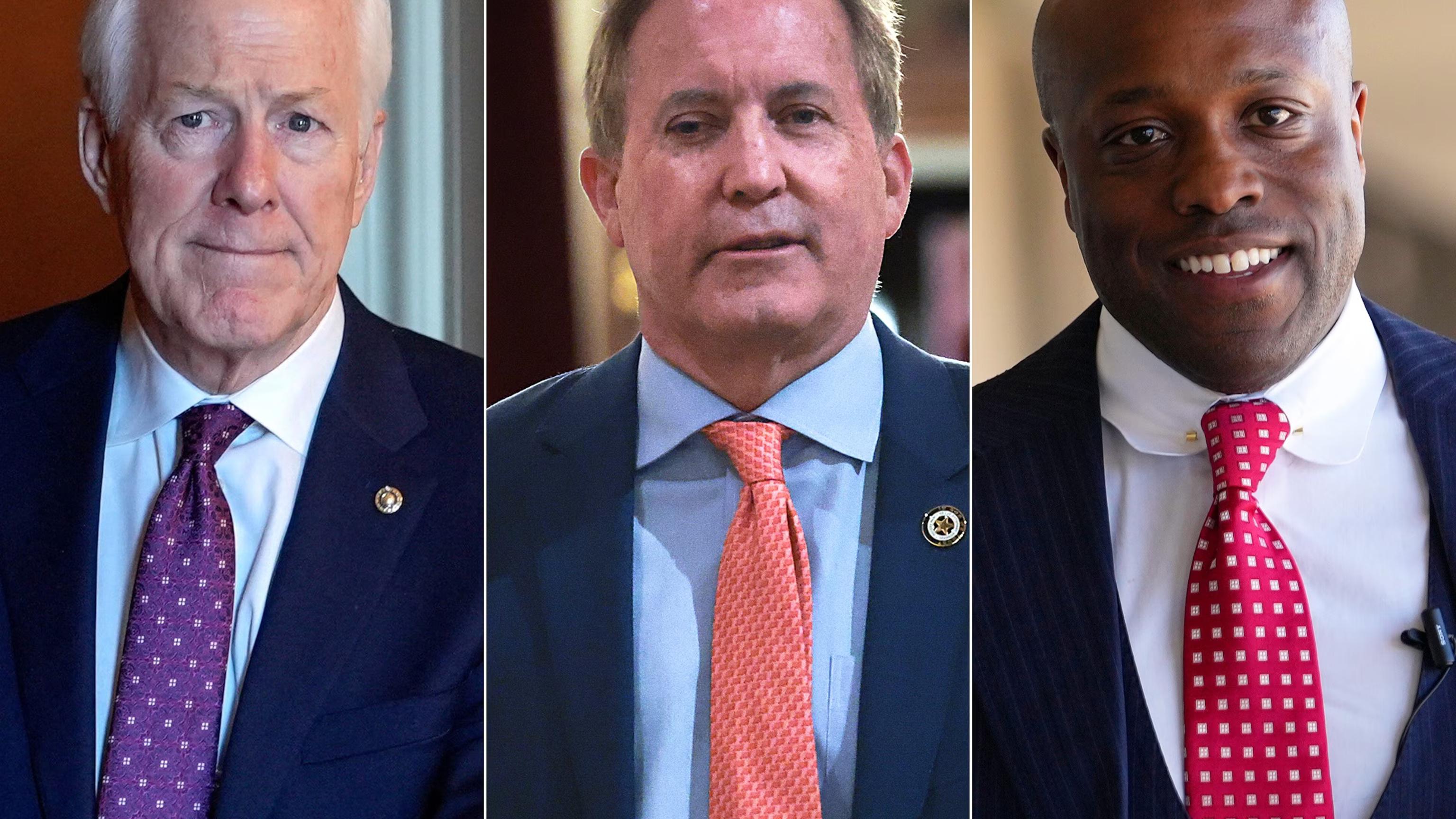
Start with the Senate race, because the warnings were all there. Before a single primary vote was cast, Senate Majority Leader John Thune said out loud that the seat could flip depending on the nominee. The National Republican Senatorial Committee told donors that Ken Paxton put the seat at risk. GOP officials estimated that a Paxton nomination would cost them at least $20 million just to hold Texas.
Primary voters picked Paxton anyway, and it wasn't close: 64% to 36% in the May runoff. Now the Senate Leadership Fund, the same super PAC that spent the Spring trying to stop him, has booked more than $100 million in ads to save him. Total ad spending in the race has blown past $500 million, and the polls have James Talarico slightly ahead.
I'm not arguing that Paxton is uniquely unfit or that his voters were foolish to dump John Cornyn. My point is simpler. The party had every red flag in front of it: an impeachment, a securities case settled through a diversion deal, and a $6.6 million whistleblower judgment. It had no real way to outweigh a well-timed endorsement from President Trump.
And this wasn't a one-off. Albeit a flawed lawmaker, Dan Crenshaw, a combat veteran and one of the most recognizable members of the Texas delegation, lost his primary to state Rep. Steve Toth. He was the only Texas House Republican running for reelection without Trump's endorsement. Sid Miller, a three-term agriculture commissioner, lost to Abbott-backed Nate Sheets. Railroad Commissioner Jim Wright, who regulates the state's oil and gas industry, lost his runoff to Bo French, the former Tarrant County GOP Chair. Go back to 2024 and the Texas House lost eight Republican incumbents in March and six more in the runoffs.
Some of those winners might turn out to be good officeholders. But look at what decided nearly every one of those races. It was loyalty, to Trump, to Abbott, to Paxton, or to the party's list of legislative priorities. Whether someone could actually do the job was barely even asked.
Who Actually Picks the Nominee
About 18.7 million Texans were registered to vote in the March 2026 primary. Roughly 1.95 million of them voted in the Republican primary. That's about one in ten. The Senate runoff drew around 1.39 million, and Paxton won it with roughly 887,000 votes, less than 5% of registered voters. One of the most powerful offices in the country was decided by a group of people smaller than the city of Austin.
The runoff makes it worse. Texas requires a majority to win a primary, which sounds fair in theory. In practice, runoffs bring out far fewer and far more fired-up voters. During early voting in some of the biggest counties, Republican runoff turnout sat somewhere between 3% and 6% of registered voters. The people who show up for that are the most motivated people in the party, and in a primary, motivation usually comes from being angry, not from caring about somebody's committee work.
Then there are endorsements, which have basically become the real primary. Trump endorsed Paxton on May 19, after runoff early voting had already started, and the race broke hard in his direction. Down in the Texas House, Abbott and Paxton together endorsed challengers against more than half of all Republicans running for reelection in 2024. When a few big names decide the outcome, the smart play for a candidate is to court those names, not to build a record voters can judge.
Money follows the same pattern. A small group of donors, most famously West Texas oil billionaires Tim Dunn and Farris Wilks, have spent years funding the party's hardline wing. Even people inside that world have started to push back. Amarillo businessman Alex Fairly, once one of the biggest givers to Dunn-aligned candidates, told the Texas Tribune that he didn't like what he found once he got a look under the hood. He has pledged money from his $20 million PAC to fight the party's attempts to keep lawmakers off the ballot.
That ballot fight is part of a bigger push to narrow the gate even further. At its 2024 convention, the Texas GOP rewrote its censure rule, Rule 44, so that officials censured for opposing the party's priorities can be kept off the primary ballot for two years. When the State Republican Executive Committee took up the first cases in October 2025, it censured five House members but backed off the ballot bans, partly because of the legal risk.
None of these tools are crazy on their own. Parties have the legal right to associate, and voters have every right to hold their officials accountable. But stack them on top of each other, and you get a system where the smallest, most ideological slice of the party decides who gets to run, and where compromising on anything can end your political career.
Why the People Who Want to Govern Stay Home
Governing in a 150-member House or 31-member Senate means negotiating. It means trading. Sometimes it means voting for a bill that gets you 80% of what you wanted. In a Texas Republican primary today, every one of those things can be used against you.
Think about what a serious candidate is looking at. Compromise gets scored as betrayal. Rule 44 counts votes against the party's priorities toward censure, so a lawmaker who cuts a deal that moves a priority halfway can get lumped in with someone who opposed it outright. Big institutional votes get turned into weapons, too. In 2024, the best predictor of whether a House Republican drew a primary challenger was how they voted on Paxton's impeachment and on Abbott's voucher bill. Seven of the eight incumbents who lost in March had voted to impeach. Taking a constitutional duty seriously became a fireable offense.
Meanwhile, actually having substantial knowledge gets you nothing. Primary voters almost never see committee work, budget writing, or constituent service. What they see is endorsements, mailers, and cable hits. A railroad commissioner's grasp of pipeline regulation or a congressman's national security work doesn't stand a chance against the right endorsement at the right time. On top of that, running for office keeps getting more expensive. The 2026 Senate primary was the most expensive on record, which helps people with national TV profiles or billionaire backers and hurts the county commissioner or school board president who has a real record to run on.
So you get exactly what you'd expect. The people most interested in policy, the ones who would chair a committee and actually read the bill, look at all of this and decide not to run. The people who thrive in it are the performers: the viral clip, the lawsuit press release, the threat to primary a colleague. Texas ends up with officeholders who are great at winning in March and are not interested in what happens during the session that follows.
The Missing Generation
If you want to see the candidate problem in one picture, look at age. Texas is one of the youngest states in the country, and yet its Legislature has been a called a gerontocracy that keeps getting older. Right now, one party is clearly building a young bench. The other mostly isn't.
Democrats have turned youth into a strategy. Run for Something, founded in 2017, recruits progressives under 35 for down-ballot races and says it has helped elect nearly 1,500 of them to school boards, city councils, and legislatures. James Talarico is that model come to life. He won a Texas House seat at 28, became the youngest member of the Legislature, and launched his Senate campaign at 36 by telling voters that Texas is a young state that needs new blood.
Republicans, meanwhile, nominated the past. The GOP Senate contest came down to a 74-year-old four-term incumbent and a 63-year-old attorney general who has been in office since 2003. The polling shows the gap too. Paxton wins Texans 65 and older 55% to 38%, while younger voters are carrying Talarico.
The primary did have a younger option, and how the party treated him says a lot. Wesley Hunt of Houston is a West Point grad, a former Army Apache pilot, and a two-term congressman with a Cornell MBA. He's in his early 40s, a full generation younger than either frontrunner. The establishment treated his campaign like a nuisance. The NRSC told his donors to stop funding him. Hunt finished a distant third with about 13%, after giving up his House seat to run, and on primary night the Senate Leadership Fund put out a statement mocking his "abysmal" finish and calling his campaign a career-ending vanity tour. Hunt's campaign had its problems, and voters had their reasons. But a party that actually wanted a deeper bench wouldn't respond to its most credentialed younger candidate by trying to end his career on election night.
It's not as if young conservatives don't exist. Gen Z moved toward Trump in 2024, and events like the Texas Youth Summit pack rooms with thousands of young conservatives. The energy is real. What's missing is a pipeline that turns energy into candidates. Run GenZ, a group that recruits and trains young Republican candidates, has said plainly that the right puts up far fewer Gen Z candidates for Congress than Democrats do, and that conservatives haven't had the same reckoning because a lot of them are happy with the leadership they have. National GOP officials don't even track candidates by their age.
Some of what holds young candidates back is the same on both sides. Most 20-somethings don't have a donor network or the savings to fund a campaign themselves. But a lot of it is specific to how Texas Republicans operate. Young candidates in both parties hear "it's not your turn," but the GOP's culture of seniority and patronage makes that harder to get past. Loyalty tests make it worse. Younger Republicans are more likely than older ones to break with party orthodoxy on some issues, and in a system where Rule 44 can censure you over a vote, a young conservative who thinks for themselves is a liability.
There are exceptions, and honestly they prove the point. Rep. Brandon Gill of Texas, 31, is the youngest Republican in Congress. Others have come up through Run GenZ. But every one of them had to find a side door. A party that took its future seriously would build a front door.
This isn't abstract. Every talented 25-year-old conservative who decides politics isn't worth the abuse pursues another career path and never runs for anything. Ten years from now, those are exactly the candidates Texas Republicans are going to wish they had.
It Starts at the County Party
The Senate race gets the headlines, but this problem is built from the ground up. Most of the machinery that decides who runs, who gets endorsed, and who gets punished lives in Texas' 254 county parties, and almost nobody is paying attention to it.
Here's how it works. Under the Texas Election Code, a county's party executive committee is made up of the county chair and the precinct chairs. Precinct chairs are elected on the March primary ballot, often with nobody running against them. Plenty of seats just sit empty. Allen West, when he was running to lead the Dallas County GOP, said the party had lost its focus on local politics and needed to fill hundreds of vacant precinct chairs, the same people who are supposed to recruit local candidates.
That small group has a lot of power. Precinct chairs pick replacement county chairs. They pick nominees when a candidate drops out after the primary. They decide which local candidates get the party's endorsement, and they're where Rule 44 censures start against officeholders who represent their county. A handful of committed activists in one county can kick off the censure of a sitting state representative.
Local endorsements have turned into loyalty screens, too. Since 2021 the state party has worked with county parties to endorse in officially nonpartisan city council and school board races, and a candidate has to win the county party's blessing before the state party will even look at them. The results have been mixed at best. In May 2025, every one of the seven contested school board candidates endorsed by the Tarrant County GOP lost, and state party chair Abraham George admitted the party hadn't done well with its local endorsements. School board members manage budgets, bond elections, superintendents, and safety plans. A county party screening them on national culture-war issues is hiring for the wrong job.
The best example of where this leads is Bo French. As Tarrant County GOP chair, he publicly went after Republican county commissioners for voting with Democrats on polling locations. He was condemned for using slurs in 2024, and again in 2025 for posting a poll asking whether Jews or Muslims were the bigger threat to America, which led Lt. Gov. Dan Patrick to call for his resignation. Tarrant's precinct chairs did nothing. He resigned in November 2025 to run for Railroad Commissioner, the office that regulates Texas oil and gas, and he beat the incumbent in the May runoff. In September 2026 he was condemned again over new posts about Native Americans and students of color.
How to Fix It
None of this means the party has to abandon its conservative principles. It means treating candidate selection like a skill instead of a loyalty test. Here are nine ways to start.
1. Build a Bench on Purpose
The party and its allies should run a standing program to find and develop people who have already governed something: county commissioners, school board members, city council members, district attorneys, veterans who have led troops. Find them early, train them on policy and on campaigning, and give them a real path up. Right now the pipeline is whoever yells the loudest.
2. Give Young Republicans a Front Door
The Texas GOP should run its own under-35 recruitment program, statewide and in every big county, the same way Democrats have used Run for Something. Scout College Republicans, Young Republicans, young veterans, and young professionals. Pair them with sitting officeholders as mentors. Point them toward winnable local races like city council, school board, and county offices where they can build a record. County parties should hold seats on their executive committees and endorsement panels for members under 35. Donors who say they care about the party's future should put real money into a pool for first-time young candidates, because the biggest thing standing in a 26-year-old's way usually isn't ideas, it's money. And party leaders should retire "wait your turn" for good.
3. Vet Your Own Candidates Before the Other Side Does
National campaign committees routinely pay for opposition research on their own recruits. Texas Republicans should do the same for statewide and congressional races, along with a voluntary pledge to disclose pending lawsuits, ethics findings, and financial conflicts. Voters can still pick a candidate with baggage. They just ought to know what's in the bag before March, not in October.
4. Lower the Runoff Threshold
Texas requires 50% to avoid a runoff. North Carolina uses 30%. Something around 40% would still keep a fringe candidate from winning with a small plurality, while sparing a lot of races the low-turnout, high-anger runoff that hands the decision to the most worked-up voters. It would also save everyone an extra twelve weeks of campaigning.
5. Weigh the Closed-Primary Question Seriously
The push to close Republican primaries has real arguments on both sides. Supporters, backed by about 73% of 2024 GOP primary voters, say open primaries let Democrats and independents shape Republican nominations, and they point to former Speaker Dade Phelan's 366-vote runoff win as proof. Opponents, Sen. Cornyn among them, warn that closing primaries would shrink an electorate that is already about one in ten registered voters and pull nominees even further from the people who vote in November. Whichever way the Legislature goes in 2027, the test should be whether the change produces nominees who can govern and win, not just nominees who pass a membership check.
6. Reform Rule 44
Censure should be for misconduct and ethics violations, not for how someone voted on a bill or for Speaker. Get rid of the ballot-ban penalty altogether. Primary voters, not members of an executive committee, should decide who stays on the ballot.
7. Make Endorsements Earn Their Weight
Governors, senators, and presidents have every right to endorse. But the ones who care about the party's long-term health should tie their endorsements to a candidate's actual record, and they should make them early, before voters have made up their minds, instead of swooping in at the end. The lesson Senate leadership is learning in Texas right now is that letting a primary sort itself out can cost $200 million.
8. Take Back Precinct Chairs
Republicans who care about governing should treat the county executive committee as the most important office nobody runs for. Fill the empty precinct chair seats. Contest the uncontested ones. Elect county chairs who see their job as finding and supporting candidates, not policing them. When county parties endorse in local races, they should judge candidates on a real record, like budget experience, community service, and showing up to public meetings, instead of a purity test on national issues. And county parties need a clear, workable way to remove a chair who embarrasses the party, so the next Bo French gets stopped at the county level instead of promoted out of it.
9. Show Up in March
The single most effective fix is one no rule change can force. For most offices in Texas, the Republican primary is the real election, and about 90% of registered voters skip it. Doubling primary turnout would do more to reward candidates who want to govern than any rule the party could pass. Business groups, chambers of commerce, churches, and civic groups that care about competent government should make primary turnout a top priority.
The Other Side
The grassroots wing of the party has a real answer to all of this, and it deserves a fair hearing. Their view is that the system is working exactly the way it's supposed to. Republican primary voters have watched leaders they elected cut deals with Democrats, including a House speaker elected in 2025 with 49 Democratic votes and only 36 Republican ones. To them, "a desire to govern" has too often meant a desire to get along with the other side. Primaries, censures, and closed primaries are how voters make sure the platform they voted for actually gets enforced.
They'd also point out that the 2024 House shake-up got results. The new majority passed school choice in 2025 after years of failed attempts. Paxton's allies note that he won statewide in 2014, 2018, and 2022 with the same baggage, and that midterms turn on base turnout, not on what consultants in Washington think is electable.
Those are fair points, and November will answer part of the question. If Paxton wins, his supporters will say the warnings were overblown and the base was right all along. If he loses, the party will have handed Democrats their first Texas Senate seat in almost forty years, in a race its own leaders saw coming. Either way, the party will have spent hundreds of millions of dollars to defend a seat it used to hold for free. That cost is real no matter who turns out to be right.
A Party Built to Win Should Be Built to Govern
Dominant parties rarely lose because the other side suddenly gets better. They lose because they stop paying attention to who they're putting forward. Texas Republicans have spent the last decade sharpening their tools for punishing disloyalty. They've spent almost nothing on finding, testing, and promoting the people who would actually run the state well.
None of the fixes are radical. Every one of them moves the party toward nominees who want the job for what they can do with it, not for the platform it gives them.
I'll be honest about why this one is personal. I grew up interested in politics. At Baylor, I started the Turning Point USA chapter and poured myself into it. I got to meet Charlie Kirk. I was exactly the kind of young conservative this party says it wants, and for a long time, running for office someday was something I genuinely wanted to do. I don't feel that way anymore, and a big reason is the way the party treats people my age. When you watch young candidates get told to wait their turn, watch a younger congressman get mocked on his way out, and watch independent thinking get treated as betrayal, the message is pretty clear. I'm sure I'm not the only one who has heard it.
Whatever happens on November 3, this Senate race has already taught the lesson. A party that can't tell the difference between a fighter and a governor is eventually going to pay a fortune to defend the fighter. Texas Republicans can keep winning. But if they want to keep winning without spending a fortune, and actually govern well while they do it, they need a better way to pick who carries the banner.