
Proposition A would create a new countywide taxing entity with authority to levy up to 75 cents per $100 of taxable value. Supporters have described what a hospital district could do. What voters have not been given is a detailed plan for what Bell County’s district actually would do, what it would cost or what would change if it passes.
Bell County voters are already casting ballots on whether to create an entirely new unit of local government.
Proposition A would establish a countywide hospital district with the authority to levy a property tax of as much as 75 cents per $100 of taxable value. Early voting began Monday and continues through Oct. 30, with Election Day Nov. 3.
Hospital districts are not inherently unusual, nor are they inherently good or bad. Texas has used them for decades to provide healthcare, finance indigent care and, in some places, operate major hospital systems.
That is not really the question Bell County voters face.
The problem is that voters have been told quite a bit about what a hospital district could do, while receiving remarkably little detail about what this hospital district would do.
There is no adopted first-year operating plan. No proposed service package. No projected number of residents who would be served. No published five-year financial model. No committed initial tax rate. No detailed explanation of how existing county healthcare spending would transition to the new district.
Yet the institution itself is on the ballot now.
Bell County already provides indigent healthcare
One of the central arguments for the district has been indigent healthcare.
But Bell County is not presently doing nothing.
Texas law already requires counties not fully served by a public hospital or hospital district to administer a County Indigent Health Care Program and provide basic healthcare services to eligible residents. Bell County describes its own program as state-mandated and operates an Indigent Health Services Department that also manages jail medical claims and other health-related responsibilities.
If a Chapter 281 hospital district begins collecting taxes, the responsibility changes. The district assumes responsibility for furnishing medical and hospital care to indigent and needy residents, while the county and municipalities within the district may no longer levy taxes for hospital purposes.
That makes the relevant question more specific than whether Bell County should provide care to people who cannot afford it.
It already has that obligation.
The question is what becomes better, less expensive or more effective by moving those responsibilities into a separate governmental entity with its own appointed board and taxing authority.
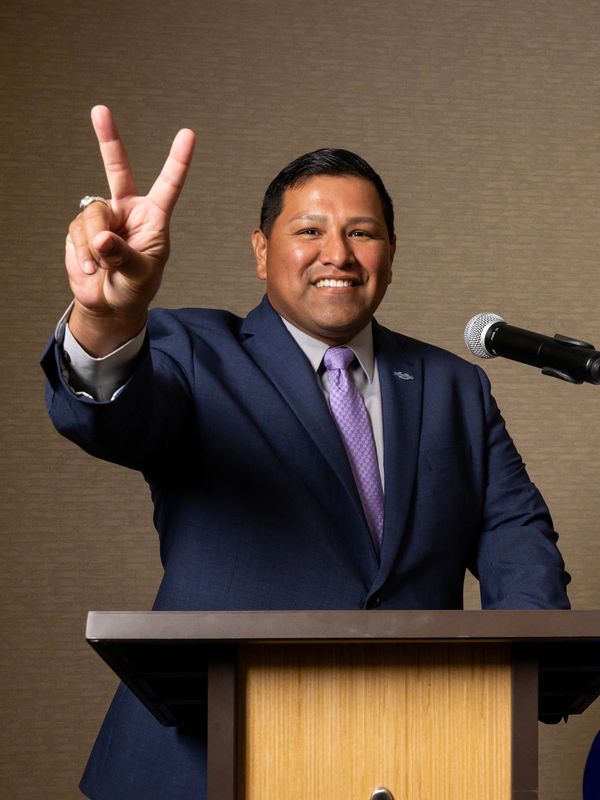
Commissioner Louie Minor, the proposal’s principal advocate, has offered several possible answers.
Minor has described possibilities. That is different from a plan.
Minor has discussed consolidating indigent healthcare, public health and jail medical services under a hospital district. He has raised ambulance service as another possibility and argued that a dedicated healthcare entity could address differences in access across Bell County.
He has also argued that a hospital district could provide a dedicated funding source and give Bell County access to additional federal healthcare dollars. In June, he told KWTX that the eventual district might build a hospital, but it could instead primarily function as a funding mechanism.
Those are possible uses of a hospital district, yet there is not an operating plan for this one.
Minor has not presented voters with a proposal saying the district will levy a particular rate, raise a specific amount of revenue, serve a projected number of patients, and provide a defined package of programs for that money.
Instead, he has repeatedly emphasized that many of those decisions would be left to the future board.
“The board of managers will be responsible for making all of those decisions,” Minor told KWTX, specifically citing the tax rate, debt and whether the district would build a hospital or primarily serve as a funding source. He said the tax could be as low as five cents and that he expected it to be much closer to five cents than the 75-cent maximum.
That is an important distinction.
Five cents is something the district’s chief advocate believes may be sufficient. It is not the rate voters are approving.
So what does the tax actually mean?
The ballot authorizes a hospital district tax of up to 75 cents for every $100 of taxable value.
The eventual board could adopt substantially less. But because there is no financial plan showing what the district intends to provide, there is also no public calculation demonstrating why the appropriate number is five cents rather than 10, 25, 50 or 75.
Here is what those rates would mean annually based on taxable value, before considering any exemptions that might eventually apply:
At 5 cents per $100 of taxable value:
$100,000 taxable value .......... $50 per year
$200,000 taxable value .......... $100 per year
$300,000 taxable value .......... $150 per year
$400,000 taxable value .......... $200 per year
$500,000 taxable value .......... $250 per year
At 25 cents per $100:
$100,000 taxable value .......... $250 per year
$200,000 taxable value .......... $500 per year
$300,000 taxable value .......... $750 per year
$400,000 taxable value .......... $1,000 per year
$500,000 taxable value .......... $1,250 per year
At 50 cents per $100:
$100,000 taxable value .......... $500 per year
$200,000 taxable value .......... $1,000 per year
$300,000 taxable value .......... $1,500 per year
$400,000 taxable value .......... $2,000 per year
$500,000 taxable value .......... $2,500 per year
At the maximum 75 cents per $100:
$100,000 taxable value .......... $750 per year
$200,000 taxable value .......... $1,500 per year
$300,000 taxable value .......... $2,250 per year
$400,000 taxable value .......... $3,000 per year
$500,000 taxable value .......... $3,750 per year
These examples use taxable value, not necessarily a property’s market value, and do not account for exemptions. A future hospital-district board could set a rate below the 75-cent maximum.
The difference matters.
For a property with $300,000 in taxable value, a five-cent hospital district tax would add $150 annually. At the maximum rate voters are being asked to authorize, the same taxable value would generate a $2,250 annual district tax.
There is no evidence Minor or anyone else is proposing that the board immediately adopt the maximum.
But 75 cents is the authority voters are being asked to create.
And that ceiling is substantial when compared with other familiar Bell County taxing entities.
Bell County’s combined county and road-district rate for 2026 is 34.63 cents per $100. Belton’s city rate is 56.19 cents. Killeen adopted 73.01 cents. Temple adopted exactly 75 cents.
At its statutory maximum, then, the hospital district could levy a rate equal to the entire City of Temple property-tax rate, slightly higher than Killeen’s and more than twice Bell County’s current combined county-and-road rate.
It would not be the highest property-taxing entity in the county. School districts generally levy more: Killeen ISD adopted 86.22 cents for 2026-27, while Belton ISD adopted $1.1177 per $100.
The point is not that 75 cents will happen.
The point is that voters have not been shown a budget demonstrating what will.
What happens to the taxes residents already pay?
Minor has repeatedly made another argument: Bell County residents are already paying for indigent healthcare.
He is right about the broader point. Bell County already spends county tax dollars on required healthcare responsibilities. The county’s own budget presentation has previously assigned a multimillion-dollar net cost to indigent medical care and administration.
Minor has argued that creating the hospital district would essentially transfer that financial responsibility to the new entity, ideally accompanied by a corresponding reduction in the county tax rate.
The word ideally matters.
State law says the county may no longer levy taxes for hospital purposes after the district is created. That does not, by itself, tell a Bell County homeowner exactly how much the county’s overall tax rate would fall—or guarantee that the reduction in the county bill would equal the new district tax appearing beside it.
That should have been modeled before Election Day.
- - If Bell County currently spends X dollars on responsibilities that would move to the district, how many cents of the county tax rate does X represent?
- - Would Commissioners Court commit to removing that amount from its tax levy?
- - Would other county expenses simply absorb the available capacity?
- - What would the combined county-plus-hospital-district bill look like at five cents? At 10? At 25?
Those numbers are knowable. Voters should have them.
Even the “8 percent” argument needs clarification
Minor has also repeatedly said Texas law requires Bell County to devote 8% of its general revenue budget to indigent healthcare.
Texas law does require counties such as Bell to administer an indigent-health program and provide specified basic services.
But HHSC’s guidance describes the 8% figure differently: a county becomes eligible for state assistance when its qualifying expenditures exceed 8% of its General Revenue Tax Levy, or GRTL. The requirement to operate the program and the 8% state-assistance threshold are related pieces of the system, but they are not the same thing as a simple mandate to dedicate 8% of the county’s entire budget to indigent healthcare.
That does not eliminate the financial pressure Minor is describing.
It does illustrate why a proposal this consequential needed more public education before reaching the ballot.
The federal-money argument needs the same treatment
The promise of additional federal funding may be one of the strongest substantive arguments for changing Bell County’s healthcare structure.
It is also one of the least clearly explained.
Bell County currently uses a Local Provider Participation Fund, or LPPF. Under Chapter 297, a qualifying county can collect mandatory payments from private hospitals and use those public funds for certain intergovernmental transfers supporting Medicaid supplemental payment programs and indigent care.
But Chapter 297 contains an important condition: it applies to a county that is not served by a hospital district or public hospital.
Creating a Bell County Hospital District therefore changes the legal structure under which the existing county LPPF operates.
That does not mean federal dollars simply disappear. Hospital districts elsewhere in Texas participate in their own healthcare-financing arrangements, including provider participation programs.
But that is precisely why voters needed a transition plan.
- - What happens to Bell County’s existing LPPF?
- - Which federal programs become newly available?
- - How much additional federal money is reasonably projected?
- - What local dollars are required to draw it down?
- - What happens to payments currently benefiting Bell County’s private hospitals?
- - Who ultimately receives and controls those funds after the district is created?
“More federal dollars” may be a compelling argument, but it could also mean less federal dollars.
How many dollars, through which mechanism and for what services is a plan.
Commissioners Court already declined to put it on the ballot
There is another part of the history voters should understand.
Before supporters gathered signatures, the Bell County Commissioners Court considered calling the hospital-district election itself.
The court rejected the proposal 4-1 on April 6. Bell County’s official records list the April 6 meeting and minutes; reporting and meeting coverage documented the rejection before the later petition effort.
That does not mean voters should reject it simply because most members of Commissioners Court did.
It does mean Proposition A did not originate from a consensus of county leadership around a fully developed county healthcare plan.
Supporters instead used another route provided by state law.
Chapter 281 requires Commissioners Court to order a creation election when presented with a petition signed by at least 100 qualified property-taxpaying voters. More than 100 signatures were submitted, bringing the district to the November ballot.
That distinction matters.
Commissioners Court did not first agree on a tax rate, service model, budget and transition strategy and then send that proposal to voters.
The court said no.
Supporters then gathered enough signatures to require the election. That is entirely lawful. It is also relevant context for understanding why so many of the details remain unsettled.
And its principal advocate will not be there to build it
Minor has also become an unusual messenger for a proposal whose biggest decisions will occur after the election.
He lost the March Democratic primary for another term as Precinct 4 commissioner to Ernest Wilkerson, who received roughly 65% of the vote. Wilkerson now faces Republican Curtis Emmons in November.
Minor’s electoral defeat does not make his healthcare arguments invalid.
But if Proposition A passes, he will not be a member of the Commissioners Court that spends the coming years appointing managers and dealing with the district’s development.
Under Chapter 281, Commissioners Court appoints a board of between five and seven hospital managers. Those managers generally serve two-year terms.
That makes the absence of a detailed roadmap more—not less—important. The person who has spent the most time publicly describing what the district might become will soon leave the governmental body responsible for appointing the people who decide what it actually becomes.
There were opportunities to have this conversation
None of this means Bell County lacks healthcare problems worth addressing.
It would not be difficult to imagine a hospital district doing meaningful work here.
Bell County could examine gaps in indigent care, mental health, preventive medicine, jail healthcare, rural access and EMS. A district might eventually support community-paramedicine programs that bring healthcare into homes, connect frequent 911 users with primary care or social services, and prevent some patients from reaching the emergency department only after their problems become crises. But that is an example of what the district could do. It is not what Proposition A says it will do.
A stronger process would have spent the months before the election defining the problem first.
- How many Bell County residents are going without needed care?
- Where are the geographic gaps?
- What is Bell County spending today?
- What are hospitals absorbing in uncompensated care?
- What does the current LPPF accomplish?
- Where is EMS coverage insufficient?
- What role should community clinics play?
Then put healthcare executives, physicians, EMS leaders, public-health officials, mental-health providers, community clinics, taxpayers and potential hospital-board members in rooms together.
Show the public several models.
Show what five cents buys, then show what 10 cents buys.
Show what happens to the county tax rate.
Show the federal matching opportunities.
Show what services move on Day One and what stays where it is.
Then ask voters whether they want to create the district.
Instead, early voting has begun while many of those questions are still waiting for a future board.
The real question
This does not have to be an argument against hospital districts.
There are hospital districts across Texas doing important work. There are also legitimate arguments that concentrating healthcare funding and expertise in a dedicated organization can make more sense than forcing healthcare to compete every year with roads, law enforcement, courts and every other county responsibility. But Bell County voters are not deciding whether hospital districts work somewhere else.
They are deciding whether to create this one, and at the moment, “this one” remains largely undefined.
Its principal advocate believes its tax rate could be around five cents. The ballot authorizes as much as 75. He has identified programs it could assume. No adopted service plan says that it will. Supporters say it can bring additional federal money into Bell County. No public financial model shows voters how much.
The county already pays for healthcare obligations. No commitment tells taxpayers exactly how their existing county tax bill changes when a hospital-district tax is added. The Commissioners Court rejected calling the election 4-1 before a petition forced the question onto the ballot. And the commissioner who has driven the proposal will leave office before most of the institution’s consequential decisions are made.
Those facts do not tell voters whether to vote for or against Proposition A. They do tell us something about the process.
Bell County is being asked to create the institution first and allow much of the plan to be written afterward.
A hospital district may ultimately be part of the answer to Bell County’s healthcare needs.
But before creating another government with taxing and borrowing authority, voters deserved a much clearer explanation of the problem it was designed to solve—and what, specifically, Bell County intended to build.